
Exosomes are one of the most interesting areas in regenerative aesthetics—but the science is more promising than settled.
Exosomes are a subtype of extracellular vesicle involved in communication between cells.
Preclinical research suggests that exosome-based preparations may influence processes relevant to skin repair, collagen formation and inflammation. Human studies have also reported improvements in hydration, elasticity, pigmentation and wrinkles.
So what is the problem?
A major 2026 review found that clinical studies remain heterogeneous and that commercially available “exosome” cosmetics often provide limited information about:
- the source
- isolation method
- processing
- characterization
- concentration
- stability.
In other words:
“Exosome” on the front of a bottle is not enough information.
The FDA has also not approved cosmetic exosome products as medical treatments, and researchers continue to call for better standardization.
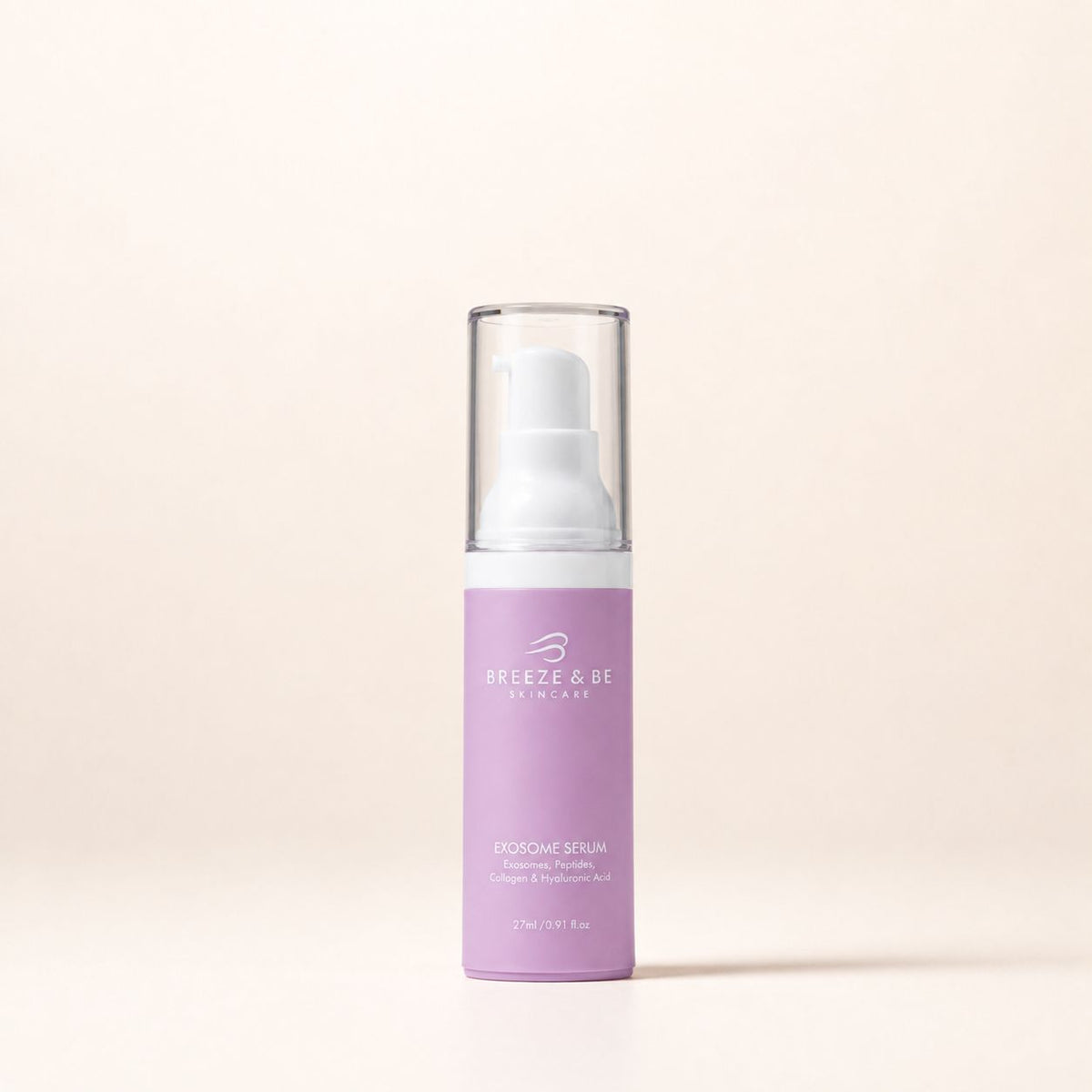
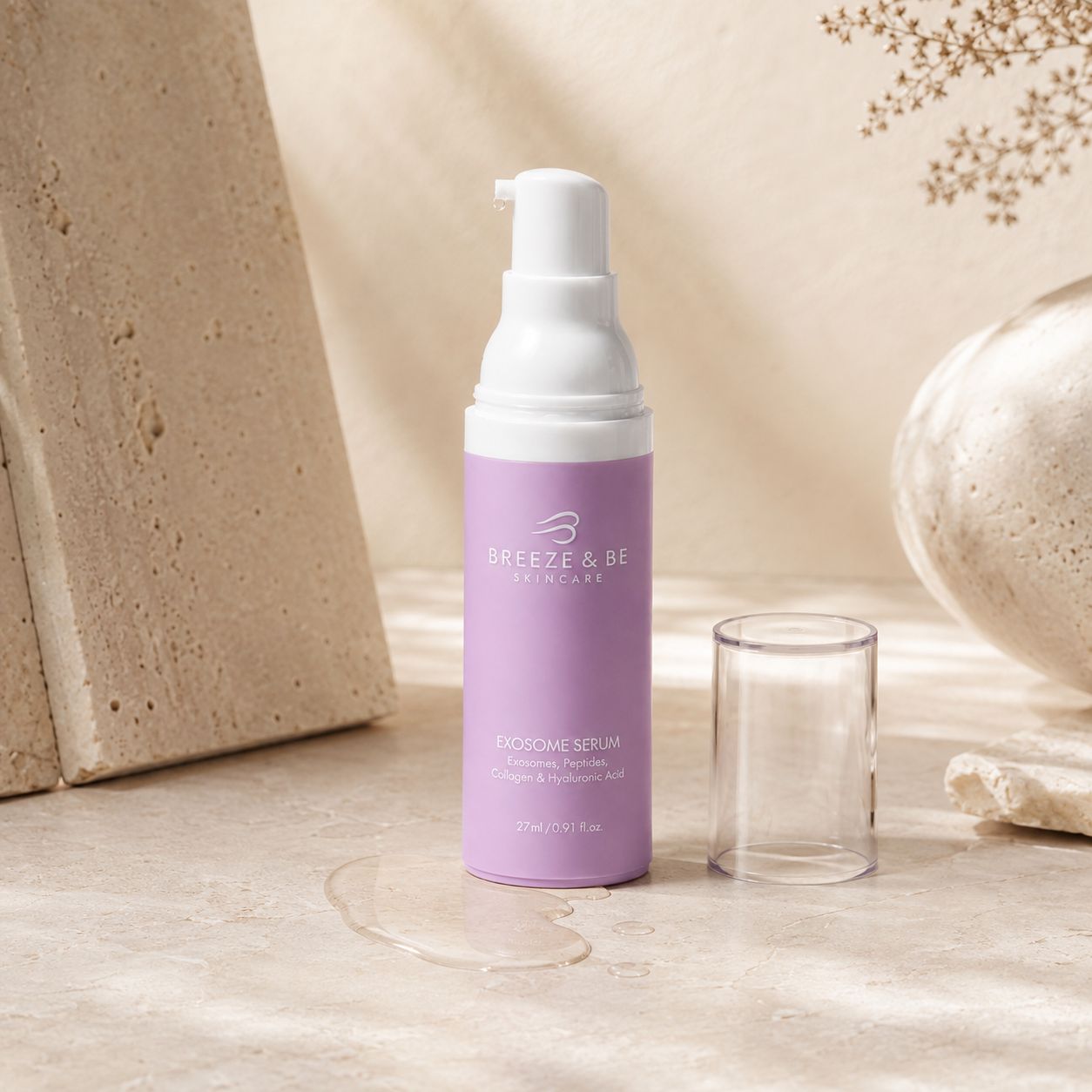
The Breeze & Be Exosome Serum also contains clearly identifiable ingredients such as peptides, sodium hyaluronate, hydrolyzed sodium hyaluronate, soluble collagen and allantoin.
We prefer to discuss what we can substantiate rather than assign an exosome percentage without appropriate raw-material documentation.
Dr. Roy’s take:
Emerging science is exciting. It becomes credible only when we are equally comfortable discussing what we still don’t know.
References
- Knauer et al. Clinical Evidence and Commercial Landscape of Topical Exosomes. PMID 42411735.
- Alzahrani et al. Exosomes in Skin Rejuvenation: Systematic Review. PMID 41912205.
- Haykal et al. Exosomes in Cosmetic Dermatology. PMID 39761139.